

Durable Gold Necklaces for Daily Wear: A Complete Guide
Table of Contents
- What Makes a Gold Necklace Durable for Daily Wear
- 14K vs 18K Gold for Daily Wear: Which Purity Works Best
- Most Durable Gold Chain Styles for Everyday Luxury
- Skin Sensitivity and Hypoallergenic Gold Options
- How to Clean Gold Necklaces at Home and Prevent Tarnish
- Styling Durable Gold Necklaces for 24/7 Wear and Layering
- Repairability, Warranty, and Long-Term Value
- Frequently Asked Questions
Last Updated: October 2, 2026
What Makes a Gold Necklace Durable for Daily Wear
A durable gold necklace for daily wear combines three essential factors: metal purity, alloy composition, and structural design. The best choices resist tarnishing, withstand constant movement, and maintain their finish through sweat, moisture, and regular contact with skin and clothing.
Most people assume that higher karat gold automatically means better durability. That's backwards. Pure 24K gold is soft and bends easily, exactly what you don't want in a necklace you'll wear every single day. The real durability comes from the alloys mixed into the gold, the strength of the chain links, and how the clasp is engineered.
At Robyn Canady, we focus on pieces designed for real life. That means selecting materials and construction methods that hold up to constant wear, not just special occasions. When you're wearing something around your neck 24/7, the details matter.
The key variables are karat purity (which affects both durability and hypoallergenic properties), the type of chain construction (solid gold, gold-filled, or gold-plated), and the clasp mechanism. A weak clasp is the fastest way to lose a necklace. A thin chain breaks under tension. Poor alloy composition leads to tarnishing and discoloration that no amount of cleaning fixes.
14K vs 18K Gold for Daily Wear: Which Purity Works Best
For daily wear, 14K gold outperforms 18K gold in durability. The extra alloy content in 14K gold makes it harder and more resistant to bending and scratching. 18K gold contains more pure gold, which makes it softer and more prone to deformation under constant stress.

Understanding Karat Purity and Alloy Composition
Karat purity measures the percentage of pure gold in an alloy. 14K gold contains 58.3% pure gold and 41.7% other metals like copper, zinc, and nickel. 18K gold contains 75% pure gold and 25% alloy metals. The remaining percentage determines the necklace's strength and longevity.
The alloy metals are what actually make the piece wearable. Copper adds strength and warmth to the color. Zinc increases hardness. Nickel provides durability but can trigger allergies in sensitive individuals. A well-formulated 14K alloy balances pure gold content with enough hardening metals to withstand daily stress.
18K gold looks richer and has a deeper color, which appeals to many buyers. But that extra pure gold makes the metal softer. When you wear an 18K necklace constantly, the chain links gradually deform. The metal fatigues. Over months or years, you'll notice the chain stretching or becoming slightly misshapen. This doesn't happen as quickly with 14K.
For someone buying a single necklace to wear permanently, 14K is the practical choice. For someone building a collection and rotating pieces, 18K works fine because each necklace gets rest days.
Tensile Strength and Metal Fatigue in Daily Use
Tensile strength is the amount of force a metal can withstand before breaking. 14K gold has higher tensile strength than 18K gold because of its greater alloy content. This matters directly in chain construction.
Every time you move, your necklace flexes slightly. The chain bends around your neck. The clasp opens and closes. Over weeks and months, these tiny movements accumulate. In materials science, this is called metal fatigue. The more pure gold in the alloy, the faster fatigue sets in.
A 14K chain can handle thousands of flex cycles before showing wear. An 18K chain will show signs of fatigue, subtle stretching, slight kinking, or weakening at the solder joints, sooner. The difference isn't dramatic, but it's measurable.
This is why many jewelry makers recommend 14K for everyday pieces and 18K for special occasion jewelry that gets worn infrequently. If your necklace is coming off only to shower or sleep, 14K is your better bet.
Most Durable Gold Chain Styles for Everyday Luxury
The chain style determines how the necklace distributes stress. Some designs spread force evenly across many links. Others concentrate stress on a few points, leading to faster failure.
Solid Gold vs Gold-Filled vs Gold-Plated Chains
Solid gold chains are made entirely of gold alloy throughout. Every link contains the same material composition. This is the most durable option for daily wear because there's no layering or plating to wear through. When you choose solid gold, you're choosing a necklace that lasts decades.
Gold-filled chains have a thick layer of gold bonded to a base metal core, typically using heat and pressure. The gold layer must be at least 1/20th of the total weight. Gold-filled is significantly more durable than gold-plated because the gold layer is thicker, usually 10-50 times thicker than plating. A well-made gold-filled necklace can last 10-30 years with daily wear before the gold layer shows wear.
Gold-plated chains have a thin electrochemical coating of gold over a base metal. The plating is typically less than 2.5 microns thick. This wears away quickly with daily contact, sweat, and friction. Most gold-plated necklaces show visible base metal within 6-12 months of constant wear. They're fine for occasional wear but not suitable for 24/7 jewelry.
18K Gold Plated, Stainless Steel, PVD Non-Tarnish Coating Paperclip Necklace →
For a necklace you'll wear every day, solid gold is the best investment. Gold-filled is a middle ground that costs less than solid gold while offering real durability. Gold-plated should be reserved for fashion pieces you'll wear occasionally or for testing a style before committing to solid gold.
Robyn Canady offers options across this spectrum. The 18K Gold Plated, Stainless Steel, PVD Non-Tarnish Coating Paperclip Necklace combines gold plating with stainless steel base and a protective PVD coating that resists tarnish and oxidation. For those seeking maximum durability without the solid gold price point, the Stainless Steel, Non-Tarnish Paperclip Necklace with Carabiner Clasp delivers hypoallergenic wear and lasting finish.

Clasp Security and Link Strength Testing
The clasp is where most necklaces fail. A weak clasp means you lose your necklace. A strong clasp means you keep it forever.
Common clasp types vary in security. A lobster claw clasp is reliable and widely used because it has a spring mechanism that's difficult to accidentally open. A spring ring clasp is smaller and more delicate, it opens more easily and fails more often. A carabiner clasp (like the one on Robyn Canady's necklaces with changeable charms) combines security with functionality, allowing you to swap out charms while keeping the chain secure.
Link strength depends on the chain construction. Solid links (where the entire link is one piece of metal) are stronger than hollow links (where the link is formed from thin walls). Thicker links distribute stress better than thin ones.
| Chain Type | Durability | Best For | Maintenance |
|---|---|---|---|
| Solid gold | Excellent | Daily 24/7 wear | Occasional polishing |
| Gold-filled | Very good | Daily wear, 10-30 years | Regular cleaning |
| Gold-plated | Fair | Occasional wear | Frequent care |
| Stainless steel with PVD coating | Excellent | Daily wear, hypoallergenic | Minimal care |
Skin Sensitivity and Hypoallergenic Gold Options
Not all gold jewelry works for everyone. Some people develop rashes, itching, or discoloration where the necklace touches their skin. This is usually a reaction to the alloy metals, not the gold itself.
How to Clean Gold Necklaces at Home and Prevent Tarnish
Tarnish is oxidation, a chemical reaction between the metal and oxygen or sulfur compounds in the air. It's not damage; it's a surface discoloration that you can remove.
Maintenance Routine for Waterproof and Sweat-Proof Wear
Gold necklaces worn daily accumulate sweat, body oils, and environmental grime. A simple cleaning routine keeps them looking new.
Addressing Oxidation and Discoloration
If your gold necklace develops a dark tarnish or discoloration, oxidation is the cause. This happens faster in humid environments or if the necklace contacts certain chemicals (perfume, lotions, chlorine).
Styling Durable Gold Necklaces for 24/7 Wear and Layering
The beauty of a truly durable necklace is that you can wear it constantly without worry. This opens up styling possibilities that delicate jewelry doesn't allow.
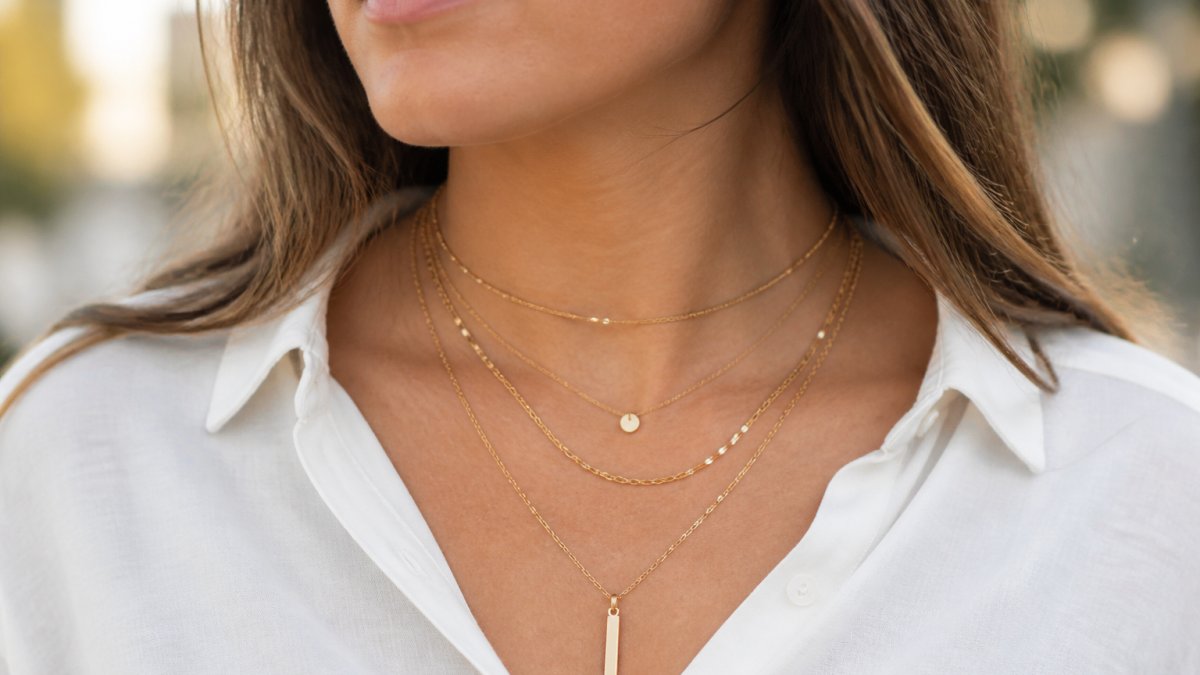
Repairability, Warranty, and Long-Term Value
A truly durable necklace is worth repairing if it ever breaks. This is where the initial investment pays off.
Frequently Asked Questions
Is 14K or 18K gold better for everyday jewelry?
14K gold is often the better choice for durable gold necklaces for daily wear because it contains more alloy metals that increase tensile strength and resistance to metal fatigue. While 18K gold is purer and has a richer color, its higher gold content makes it softer and more prone to bending or breaking under constant wear. 14K gold balances durability with lasting beauty, making it ideal for pieces you'll wear 24/7.
What type of necklace chain is most durable for daily use?
Solid gold chains are the most durable option for daily wear, but gold-filled chains offer excellent durability at a lower price point. Avoid gold-plated chains for everyday jewelry, as the thin plating wears away with sweat and friction. Look for chains with secure lobster claw or carabiner clasps, and choose thicker link styles like paperclip or cable chains, which resist kinking and breaking better than delicate dainty chains.
How can I tell if a gold necklace is high quality?
Check the karat stamp (14K, 18K, or 24K) to verify purity, and inspect the clasp for security and durability. High-quality necklaces use solid gold or gold-filled construction, not plating. Look for tarnish-resistant coatings like PVD non-tarnish finishes that protect against oxidation. Reputable brands provide warranty information and clear material specifications. Robyn Canady's pieces, for example, are crafted with premium materials like stainless steel cores and PVD coatings designed to maintain luster through daily wear.
Does solid gold tarnish with daily wear?
Pure solid gold (24K) does not tarnish, but lower-karat gold (14K and 18K) contains alloy metals that can oxidize over time, causing discoloration. Sweat and moisture accelerate this process. Protective coatings like PVD non-tarnish finishes help prevent oxidation and keep your necklace radiant. Regular cleaning with a soft cloth and mild soap removes surface oxidation and extends the life of your jewelry. Proper storage in a dry place also helps minimize tarnishing between wears.
Choosing a durable necklace for daily wear means prioritizing materials and construction over price alone. A 14K solid gold or gold-filled necklace with a secure clasp and well-engineered chain will outlast cheaper alternatives by years. Robyn Canady's collections are designed with this durability in mind, offering pieces that celebrate life's moments while standing up to everyday wear. Shop our selection of durable necklaces and discover jewelry built to last.