

How to Choose Heirloom Quality Jewelry: 2026 Guide
Table of Contents
- What Makes Jewelry Heirloom Quality?
- Is Solid Gold Worth the Price for Heirloom Pieces?
- How to Identify High Quality Jewelry: Hallmarks, Settings and Stones
- Timeless Design: Choosing Pieces You Will Never Want to Redesign
- How to Care for Heirloom Jewelry: Storage, Maintenance and Insurance
- Ethical Sourcing and Repurposing Family Pieces
- Frequently Asked Questions
Last Updated: September 27, 2026
What Makes Jewelry Heirloom Quality?
Heirloom quality jewelry is fine jewelry built from durable precious metals and securely set stones, designed to hold its structure, beauty, and meaning across decades of wear. At Robyn Canady, nearly two decades of design experience has taught us that the pieces customers treasure most share three traits: solid construction, timeless design, and materials that survive daily life.
The 2:1:1 Rule for Evaluating Jewelry
The 2:1:1 rule is a quick scoring method for judging any piece before you buy: two points for materials, one for construction, one for design.
- Materials (2 points): Is the metal solid gold, platinum, or sterling silver? Are the stones natural and properly graded?
- Construction (1 point): Are settings secure, clasps reinforced, and joints soldered rather than glued?
- Design (1 point): Will this silhouette still feel right in 20 years, or does it follow a trend cycle?
Is Solid Gold Worth the Price for Heirloom Pieces?
Solid gold is worth the price for heirloom pieces because it can be repaired, resized, and re-polished indefinitely, while plated and filled metals cannot. Gold-filled jewelry contains a thick layer of gold bonded to base metal, and gold-plated jewelry carries only a microscopic coating. Both eventually wear through at friction points: clasps, chain links, and ring bands.
Metal Hardness and Everyday Wearability
Metal hardness determines how a piece ages on your body. Pure gold (24K) is too soft for daily wear and scratches easily. Platinum is denser and more scratch-resistant but heavier and more expensive to work with. For most people, 14K gold offers the best balance: hard enough for rings and bracelets, comfortable enough for all-day wear.
How to Identify High Quality Jewelry: Hallmarks, Settings and Stones
You can identify high quality jewelry by checking three things in order: the hallmark stamp, the setting integrity, and the stone grading.
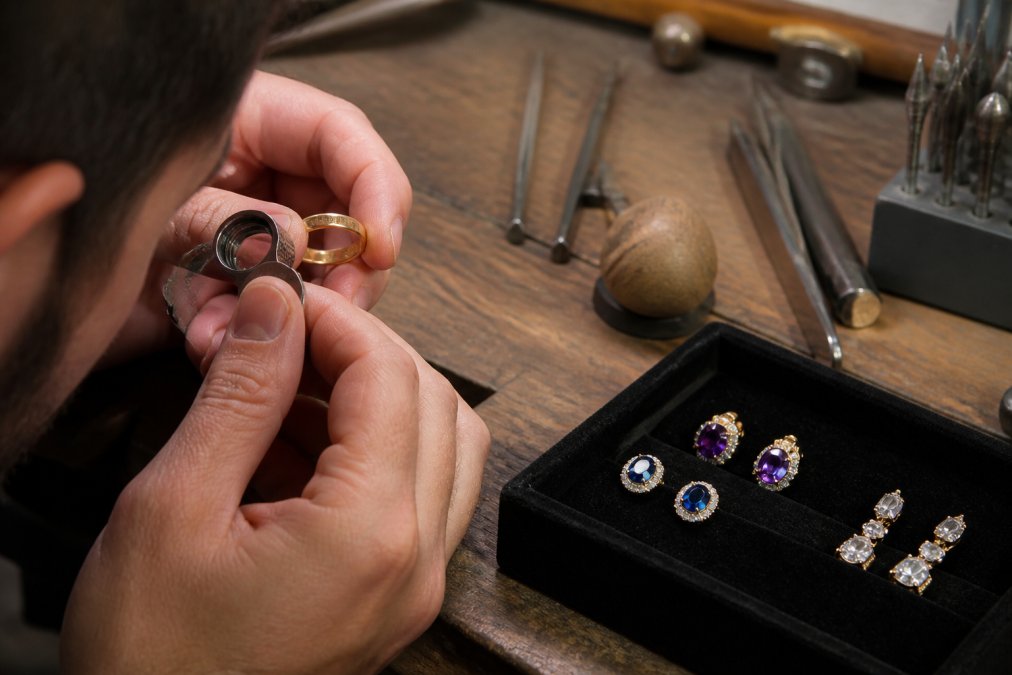
Reading Hallmarks and Understanding Provenance
A hallmark is a stamped mark indicating metal purity and, often, the manufacturer. In the United States, the FTC Jewelry Guides on marking and advertising set the rules for what those stamps must mean, so "14K" or "585" is a legal claim, not decoration.
| What to Check | Where to Look | Red Flag |
|---|---|---|
| Hallmark | Inside band, clasp tag | No stamp at all |
| Setting integrity | Prongs, bezel edges | Gaps, wiggling stones |
| Stone clarity | Loupe at 10x | Visible inclusions at surface |
| Clasp security | Lobster, box, or figure-8 | Loose or bent mechanism |
Timeless Design: Choosing Pieces You Will Never Want to Redesign
Timeless design means choosing proportion and silhouette over trend. A classic aesthetic, clean lines, balanced scale, and versatile metal tones, is what keeps a piece wearable across decades. The Gemological Institute of America on diamond and gemstone grading notes that cut quality drives how a stone performs in light, and a well-cut stone in a simple setting outlasts any elaborate trend-driven mount.
In practice, this means favoring:
- Medium-scale pendants that layer with anything
- Stud or short-drop earrings over statement dangles
- Smooth bands and simple link chains
- Neutral gemstones that pair with your existing wardrobe
How to Care for Heirloom Jewelry: Storage, Maintenance and Insurance
Caring for heirloom jewelry comes down to four habits: store pieces in a controlled environment, clean gently, inspect regularly, and document everything. Most damage we see is not from wear, it is from storage. Chains tangle and scratch each other, humidity dulls stones and tarnishes metal, and loose pieces in a single box chip against one another.
Storage and Environmental Preservation
Storage is where heirloom jewelry is most often lost to neglect, and it is the topic most guides skip entirely. The goal is to control three variables: humidity, sulfur, and contact.
- Humidity: Aim for a stable indoor range, roughly 40-50% relative humidity. Bathrooms, basements, and windowsills swing far outside that and accelerate tarnish on sterling silver and dullness on pearls and opals.
- Sulfur and airborne contaminants: Natural rubber bands, latex, wool, and some cardboard boxes release sulfur compounds that tarnish silver and gold alloys. Avoid storing jewelry in contact with these materials.
- Anti-tarnish solutions: Silver stored in tarnish-resistant fabric pouches or in sealed containers with anti-tarnish strips tarnishes far more slowly than silver left open to air. Activated charcoal and anti-tarnish paper are inexpensive and replaceable.
- Contact: Each piece in its own soft pouch or lined compartment. Chains stored flat or hung rather than coiled, to prevent kinks that weaken links over time.
A practical routine:
- Store each piece in its own soft pouch or lined compartment, away from rubber, wool, and cardboard.
- Keep pieces away from bathrooms and windows, where humidity swings.
- Clean with warm water, mild soap, and a soft brush; dry fully before storing.
- Check clasps and prongs every few months.
- Take pieces to a professional jeweler annually for inspection.
Appraisals and Insurance Documentation
A professional appraisal is a written valuation of your piece, and it is the document insurers require. Schedule one at purchase and update it every few years, since metal and gemstone values shift. Keep the appraisal, receipt, and photographs together, ideally in cloud storage plus a physical copy. This is the step almost everyone skips, and it is the one that matters most when something goes wrong.
- An appraisal states replacement value, what it would cost to buy an equivalent piece new. This is what most insurers use to set coverage.
- A gemological report from a recognized laboratory identifies the stone itself, species, treatments, and sometimes origin. It is not a valuation, but it is the evidence an appraiser relies on and the document that proves your stone is what you say it is.
Generational Transfer Logistics
Passing jewelry down safely is a legal and logistical process, not just an emotional one, and almost no competing guide addresses it. Three practical steps cover most situations:
- List each piece in your will or in a separate tangible-personal-property memorandum that your will references. Naming specific pieces to specific heirs prevents disputes that otherwise end up dividing families more than the jewelry itself.
- Match each piece to its documentation. An heir who receives a ring without its appraisal, gemological report, and provenance notes inherits a fraction of its value and none of its story.
- Hold a family conversation before the transfer, not after. Walk heirs through what each piece is, what it is worth, and what care it needs. A short written inventory, piece, description, approximate value, storage instructions, prevents the most common failure mode: an heir who stores a pearl strand in a plastic bag and ruins it within a year.
Ethical Sourcing and Repurposing Family Pieces
Ethical sourcing is a quality metric, not just an ethical one. Traceable stones and recycled or responsibly mined metals carry documentation that supports both resale value and provenance, and buyers increasingly treat provenance paperwork as part of what makes a piece worth passing down. Ask where stones originated and whether the seller can provide that information in writing.
What Ethical Sourcing Documentation Actually Looks Like
Vague assurances are not documentation. Concrete proof usually takes one of these forms:
- Kimberley Process certificates for rough diamond shipments, which confirm the stones did not originate in conflict zones. These are issued at the shipment level, not the individual stone, so they are a starting point rather than a full chain of custody.
- Responsible Jewellery Council (RJC) certification for the seller or manufacturer, which signals third-party auditing of sourcing, labor, and environmental practices across the supply chain.
- Recycled metal declarations from refiners, which state the percentage of reclaimed gold or platinum in the alloy. Recycled gold is chemically identical to newly mined gold, so it carries no durability penalty.
- Country-of-origin disclosure for colored stones. A sapphire from Sri Lanka and one from Madagascar can look identical at the counter, but documented origin affects both resale value and the story you pass down.
Repurposing Without Losing the Original
For generational transfer, write down what you know: who owned the piece, when it was acquired, and any story attached. That record, paired with your appraisal, is what turns jewelry into an heirloom.
Frequently Asked Questions
What is heirloom quality jewelry?
Heirloom quality jewelry is made from solid precious metals like 14K or 18K gold or platinum, set with durable genuine gemstones, and constructed so the setting and clasp hold up to decades of wear. It uses timeless design rather than trends, which is why it can be passed down and often holds or grows in resale value over time.
Is solid gold worth the price for heirloom pieces?
Yes, when the piece is built to last. Solid gold will not flake or discolor the way gold-plated jewelry does, so it survives daily wear and retains resale value. A 14K gold piece like the 14K Amethyst + Diamond Teardrop Earrings costs more upfront, but it is designed to be treasured and passed to the next generation rather than replaced every few years.
How can you tell if a piece of jewelry is built to last?
Check three things: the metal stamp (14K, 18K or platinum), the setting integrity (prongs should be thick and tight, not thin wire), and the clasp security. Look for hallmarks and ask about provenance. A piece with solid construction, a secure stone mounting and a sturdy clasp will hold up far better than fashion jewelry with glued or thinly plated components.
How do you care for heirloom jewelry so it lasts?
Store each piece separately in a soft pouch or lined box to prevent scratches, keep it away from humidity and direct sunlight, and clean it gently with warm water and mild soap. Have prongs and clasps checked by a jeweler once a year, and get a professional appraisal every few years so your insurance coverage stays accurate as values change.
Choosing pieces that will outlast trends takes more than a good eye; it takes knowing what to look for in metal, settings, and stones. Robyn Canady designs heirloom-worthy jewelry with quality materials made to last, from solid 14K gold pieces to effortless layering styles meant for every chapter of your story, with complimentary shipping on orders $100+. Explore the collection and find the piece you will pass down.