

How to Clean Delicate Gold Chains: A Step-by-Step Guide
Table of Contents
- What You'll Need Before You Start
- Step-by-Step: How to Clean a Gold Necklace at Home
- Cleaning Gold Jewelry with Dish Soap: Best Practices
- How to Clean a Gold Chain Without Tangling It
- How to Clean Tarnished Gold Jewelry (and What to Avoid)
- Know Your Gold: Solid, Gold-Filled, and Gold-Plated
- Special Care for Gemstones, Pearls, and Mixed Materials
- When to Stop and See a Jeweler
- Frequently Asked Questions
Last Updated: October 20, 2026
What You'll Need Before You Start
Learning how to clean delicate gold chains starts with two simple supplies: mild dish soap and a soft-bristled toothbrush. At Robyn Canady, we've spent nearly two decades designing dainty, layer-ready pieces, so we know a thin chain needs a lighter touch than a chunky bracelet.

Gather these items before you begin:
- A small bowl of cool water
- A drop of mild dish soap
- A soft-bristled toothbrush
- A lint-free cloth
- A small towel for your work surface
Skip anything abrasive. Baking soda, lemon juice, and toothpaste all scratch gold surfaces, and we'll explain why in a later section.
One more thing: check the clasp and any jump rings before you start. A worn spring ring can pop loose mid-scrub, and a delicate chain is easy to lose down a drain. Plug the sink, or better yet, work over the bowl only.
Step-by-Step: How to Clean a Gold Necklace at Home
Cleaning a gold necklace at home takes about five minutes and three steps: mix a soapy solution, soak and gently brush, then rinse and dry. This gentle cleaning method works on solid gold and gold-filled chains alike. It removes everyday dirt and buildup without stressing thin links.
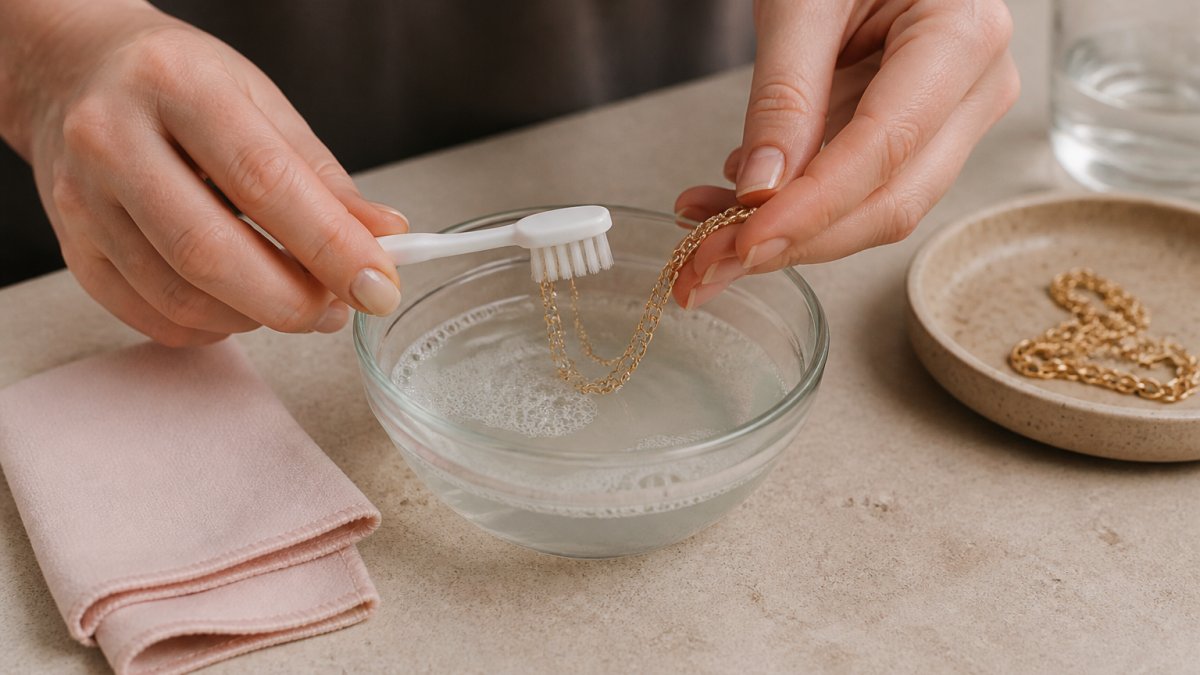
Step 1: Prepare Your Cleaning Solution
Fill a small bowl with one cup of cool water and add a single drop of mild dish soap. Swirl it with your finger until the water looks slightly cloudy. That's your entire cleaning solution. Hot water can loosen glue in some settings and isn't necessary for gold. Keep the bowl shallow, about two inches of water, so a dropped chain stays within reach and doesn't sink to the bottom of a deep vessel where you have to fish it out.
Step 2: Soak and Gently Scrub
Place the chain in the bowl and let it soak for three to five minutes. Then lift it out and support it flat in your palm. Dip the soft-bristled toothbrush in the soapy water and brush each link with light strokes.
For a delicate chain, the brush technique matters more than the soap. On a fine cable or box chain, use the side of the bristles rather than the tips to reach the seam where each link closes, since that seam is where skin oils and lotion collect and where a link is most likely to wear thin.

Step 3: Rinse and Dry Thoroughly
Hold the chain under cool running water or dip it in a second bowl of clean water to remove residue. Lay it flat on a lint-free cloth and pat it dry. Let it air dry completely before wearing or storing it. Trapped moisture dulls shine and can weaken the links over time. Pay special attention to the clasp: a spring-ring or lobster clasp has a hollow barrel that holds water, so open and close it a few times over the cloth and blot the interior before storing.
Cleaning Gold Jewelry with Dish Soap: Best Practices
Dish soap is the safest everyday cleaner for gold jewelry because it cuts through skin oils and lotion without harsh chemicals. The key is a single drop in a bowl of water, never a concentrated squirt directly on the metal. A little goes a long way.
Follow these best practices:
- Use cool or lukewarm water, never hot
- Choose a plain, mild formula over anything with bleach or citrus additives
- Clean once every few weeks for pieces worn daily
- Rinse fully so no soapy residue dries in the links
A common mistake is leaving a chain to soak overnight. Long soaks don't clean better, and they can loosen knots or soften the adhesive in some settings. Five minutes does the job.
How to Clean a Gold Chain Without Tangling It
The safest way to clean a gold chain without tangling it is to keep it flat and supported at every stage. Tangles happen when a chain dangles free, so never hold a delicate necklace by one end over a bowl. Lay it down, work on it in place, and lift it as little as possible.
Lay It Flat and Support the Chain
Rest the chain on a small plate or your palm while you scrub. Work section by section rather than dragging the whole length through your fingers. If the chain does tangle, don't pull. Add a drop of soap and tease the knot apart with two pins.
Use a Clasp or Container to Secure It
Fasten the clasp before cleaning so the ends can't swing free and knot around each other. For very fine chains, place the piece in a small mesh strainer and lower that into the bowl. The strainer holds the chain in a loose coil and keeps it from slipping away.
14K Gold Filled Fine Cable Chain →
How to Clean Tarnished Gold Jewelry (and What to Avoid)
Gold itself doesn't tarnish, but the metals blended into it and the residue left on the surface can look dull or discolored. Cleaning tarnished gold jewelry means removing that film gently. A soap soak and soft brush handle most cases. Before you reach for any remedy, though, identify what you're cleaning, the right method for solid gold can ruin a plated chain, and that decision comes before the cleaning, not after.
Identify the Gold Type First
Check the stamp on the clasp or the tag near it. "14K," "18K," or "585" means solid gold, which tolerates gentle soap and brushing. "1/20 14K GF" or "14K GF" signals gold-filled, a thick bonded layer that also cleans safely with soap and water. "14K GP," "HGE," or no stamp at all usually means gold-plated, where the gold layer is microns thin and scrubbing wears it away. If you can't find a stamp, treat the piece as plated and clean it with a damp cloth only. The FTC's guidance on gold jewelry marketing claims explains how gold-plated and gold-filled labels differ, which helps you understand what you're cleaning.
What to Avoid, and Why
Each of these is a common home remedy that does real damage to a delicate chain:
- Baking soda paste: the grit is harder than the gold alloy and scratches polished surfaces; on a fine chain, the paste packs into link seams and is hard to rinse out.
- Lemon juice or vinegar: acidic enough to pit lower-karat alloys and to dull the surface over repeated use.
- Toothpaste: contains abrasives and sometimes whitening agents that dull shine and leave residue in the links.
- Chlorine and bleach: weaken gold alloys at the grain boundaries and attack the solder in clasps and settings; even a diluted splash in a sink can affect a thin chain.
- Ultrasonic cleaners: the vibration can shake loose stones in delicate pieces and stress solder joints on fine links.
- Ammonia-based jewelry dips: too aggressive for plated and gold-filled pieces and can strip the surface layer.
If Discoloration Stays
If a gentle soap clean doesn't lift the discoloration, the piece may be plated and worn through to the base metal, or the alloy itself may be reacting to something it touched. That's a repair or materials question, not a cleaning one. Stop cleaning and have a jeweler look at it before you try anything stronger, repeated attempts on a worn plated chain only remove more of the gold layer.
Know Your Gold: Solid, Gold-Filled, and Gold-Plated
Before you clean any chain, know what it's made of. Solid gold is the same alloy all the way through and handles gentle cleaning well. Gold-filled jewelry bonds a thick layer of gold to a base metal and also cleans safely with soap and water. Gold-plated pieces carry a very thin gold layer that wears away with scrubbing, so clean them rarely and lightly.
Our 14K gold-filled pieces, like the 14K Gold Filled Fine Cable Chain, hold up to regular gentle cleaning far better than plating. Check the stamp inside the clasp: "14K" or "585" means solid gold, while "1/20 14K GF" signals gold-filled.
| Gold Type | What It Means | Cleaning Approach |
|---|---|---|
| Solid gold | Same alloy throughout | Soap, water, soft brush |
| Gold-filled | Thick gold layer over base metal | Soap, water, soft brush |
| Gold-plated | Thin gold layer, wears easily | Light wipe, minimal scrubbing |
Special Care for Gemstones, Pearls, and Mixed Materials
Chains with stones or mixed materials need a modified approach. Pearls, opals, and turquoise are porous and dislike soaking, so wipe them with a damp cloth instead. Enamel can chip if knocked against the bowl, so cushion it on a soft towel.
For pieces like the Triple Infinity Necklace, which pairs a sterling silver chain with hand-hammered gold-filled circles, keep the soap solution mild and skip the brush on the textured circles. A soft cloth lifts residue without dulling the hammered finish. When in doubt, clean only the chain and leave the decorative elements alone.

When to Stop and See a Jeweler
Some problems are beyond a bowl of soapy water. Stop cleaning and visit a jeweler if you notice:
- A clasp that opens on its own
- Links that look stretched or worn thin
- A stone that feels loose in its setting
- Discoloration that won't lift after a gentle clean
- A knot you can't untie without force
These are signs of wear, not dirt. A jeweler can tighten a clasp or re-tip a setting before a small issue becomes a lost heirloom. For everyday pieces, proper storage and a gentle clean every few weeks keep delicate gold chains looking new for years.
Frequently Asked Questions
How often should you clean a delicate gold chain?
Clean your delicate gold chain every two to four weeks with mild dish soap and water. If you wear it daily, especially in humid or sweaty conditions, a quick rinse and dry each week helps prevent buildup. Deep clean monthly to keep links free of dirt and oils. For chains worn occasionally, clean before and after each wear to maintain shine.
Can you use toothpaste to clean gold jewelry?
No, avoid toothpaste. It contains abrasives that can scratch gold, especially delicate or plated surfaces. Instead, use mild dish soap and cool water with a soft-bristled toothbrush. For tarnish on solid gold, a jeweler-approved cleaner is safer. Toothpaste may seem convenient, but it can dull the finish and damage thin chains over time.
What is the safest way to clean a thin gold necklace?
The safest method is to soak the chain in a bowl of cool water with a drop of mild dish soap for 10-15 minutes, then gently brush with a soft-bristled toothbrush. Rinse well and pat dry with a lint-free cloth. Avoid pulling or stretching the chain; support it flat. Never use harsh chemicals or ultrasonic cleaners on thin or plated chains.
When should you take a delicate gold chain to a jeweler for cleaning?
See a jeweler if the chain has deep tarnish, stubborn buildup in intricate links, loose clasps, or signs of damage like stretched links. Also consult a professional if the piece contains gemstones, pearls, or enamel that require specialized care. A jeweler can assess whether cleaning is safe or if repairs are needed before cleaning.
A delicate chain rewards a light touch, and the right care keeps it ready to layer for years. At Robyn Canady, we design pieces meant to be worn and loved daily, from our Layer it up! 14K Gold Filled layering set to heirloom-worthy fine jewelry. Every order over $100 ships free, and our gold-filled chains are built to hold up. Get started with Robyn Canady and find the piece that fits your story.