

How to Spot Quality Custom Jewelry: 7 Steps
Table of Contents
- What Makes Custom Jewelry Worth Evaluating
- Step 1: Inspect Metal Quality and Hallmarks
- Step 2: Examine the Jewelry Setting Quality
- Step 3: Check Symmetry, Alignment, and Surface Finish
- Step 4: Evaluate Stone Setting and Prong Security
- Questions to Ask a Custom Jeweler Before Ordering
- Understanding the Custom Jewelry Design Process
- Documentation and Durability: What to Expect
- Frequently Asked Questions
Last Updated: October 5, 2026
What Makes Custom Jewelry Worth Evaluating
When you're shopping for custom jewelry, the difference between a piece that lasts a lifetime and one that falls apart in months comes down to quality. At Robyn Canady, we understand that custom jewelry represents both a financial investment and an emotional one, it's meant to celebrate your story, mark a milestone, or honor a connection that matters.
But how do you actually know if a custom piece is worth the price? Most people don't have a framework for evaluating craftsmanship. They look at photos online, read reviews, and hope for the best. This guide walks you through exactly what to look for when you want to spot quality custom jewelry.
The key is learning to inspect the piece like a jeweler would: examining the metal, checking the stone setting, assessing the finish, and asking the right questions before you order. We'll cover seven concrete steps that separate heirloom-worthy pieces from those that won't hold up.
Step 1: Inspect Metal Quality and Hallmarks
The foundation of any quality piece is the metal itself. Before you even look at stones or design details, you need to understand what metal you're buying and verify its purity.
Start by identifying the metal type. Gold, silver, stainless steel, and platinum each behave differently and carry different price points. Gold comes in different karats: 14K gold contains 58.3% pure gold, while 24K is pure but too soft for everyday jewelry. Sterling silver is 92.5% pure silver mixed with other metals for strength.

Look for hallmarks and maker marks on the piece itself. These tiny stamps tell you the metal purity and often identify the jeweler who created it. A legitimate custom jeweler marks their work. You should see something like "14K" for 14-karat gold or "925" for sterling silver.
Ask your jeweler to provide documentation of the metal. A reputable custom jeweler like Robyn Canady provides transparency about materials. They'll tell you upfront whether you're getting solid gold, gold-filled, or plated pieces. Gold-filled has a thick layer of gold bonded to brass and won't rub off with wear.
The metal purity directly affects durability and value. Higher karat gold is softer but more valuable. Lower karat gold is stronger for everyday wear. The jeweler should help you choose what matches your lifestyle and budget.
Step 2: Examine the Jewelry Setting Quality
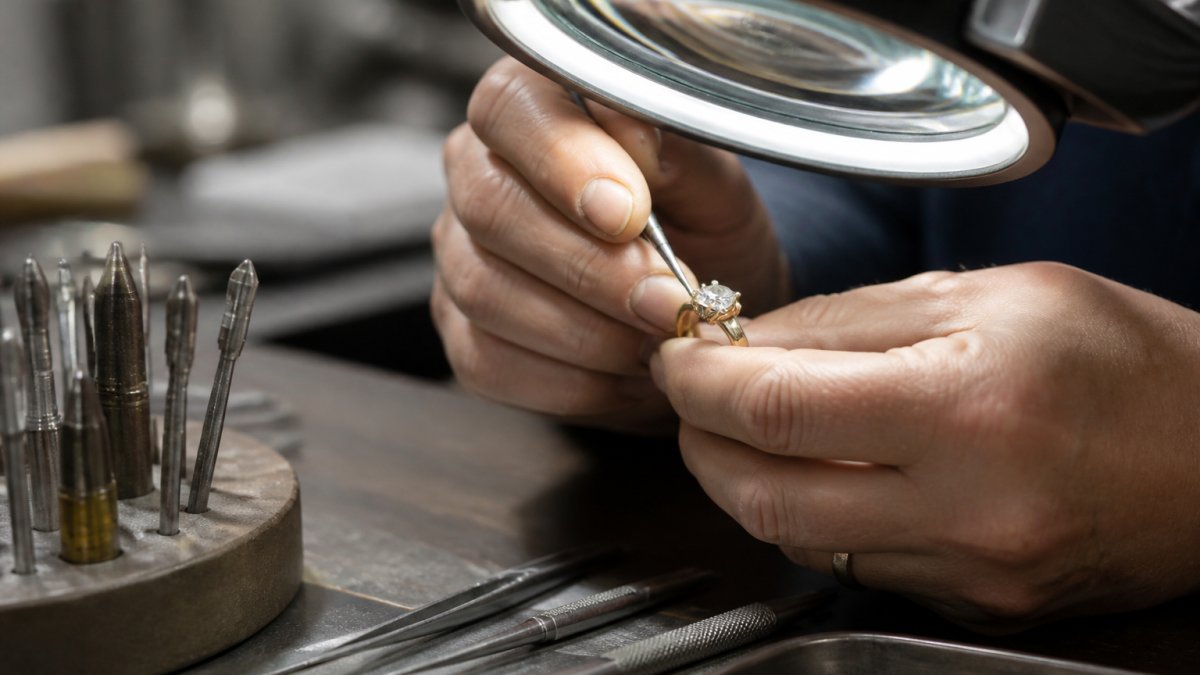
The setting is where your stone sits, and it's critical. A beautiful stone in a poorly made setting will fail. Look at how the stone is held in place and whether the setting shows signs of quality craftsmanship.
Inspect the prongs or bezel closely. Prongs are the metal fingers that hold a stone. They should be smooth, evenly spaced, and firmly gripping the stone without gaps. Run your finger gently around each prong.
Check for solder joints and welds. Where metal pieces connect, there should be clean solder joints or welds. These connections should be smooth, not lumpy or discolored. Discoloration suggests the jeweler used low-quality solder or didn't finish the joint properly.
Look at the stone's security. Gently move the stone side to side with your finger (if the jeweler allows). It should not move at all. Any movement means the setting is loose and the stone could fall out.
The setting determines whether your piece survives daily wear. Poor settings fail within months. Quality settings last generations.
Step 3: Check Symmetry, Alignment, and Surface Finish
Quality jewelry shows precision in every angle. Symmetry and alignment reveal whether the jeweler paid attention to detail or rushed the work.
Examine symmetry from multiple angles. Hold the piece and rotate it slowly. Both sides should match. If it's a pair of earrings, they should be identical. If it's a pendant, the design should be balanced. Uneven shapes, lopsided elements, or asymmetrical details signal careless craftsmanship.
Check alignment of design elements. If your piece has multiple components, like a pendant with decorative details or a ring with side stones, they should line up perfectly. Stones should sit at the same height. Decorative elements should be centered. Misalignment suggests the jeweler didn't use proper tools or didn't care about precision.
Run your fingers over the surface. Quality jewelry has a smooth, polished finish. You should feel no rough spots, sharp edges, or uneven texture. Rough edges catch on clothing and skin. Sharp corners can cut you. A well-finished piece feels as good as it looks.
Pay special attention to the back of the piece, which people often overlook. Quality jewelers finish the back as carefully as the front. If the back is rough or unfinished, the front craftsmanship is likely compromised too.
Step 4: Evaluate Stone Setting and Prong Security
Beyond the visual inspection, you need to understand how the stone is secured and whether that method will hold up over time.
Understand your setting options. Prong settings use metal fingers to grip the stone, elegant but require maintenance. Bezel settings wrap metal around the stone, more secure and lower-profile. Tension settings use the metal band itself to hold the stone, modern and requires precision engineering. Each has trade-offs. Ask your jeweler which setting works best for your lifestyle.
Verify the stone is genuine. Ask for documentation of the gemstone. Is it natural, lab-created, or synthetic? What's the grade or quality? A legitimate jeweler provides this information. They may offer certification from a gemological institute for valuable stones.
Check prong height and thickness. Prongs should be tall enough to grip the stone securely but not so tall they look fragile. They should be thick enough to hold the stone without bending. Thin, delicate prongs fail quickly. Overly thick prongs look clunky. Quality jewelers find the right balance.
Ask about maintenance. How often should you have the piece checked? Will the jeweler inspect it for free? Quality custom jewelers offer ongoing support. They'll re-tighten prongs, re-polish surfaces, and make repairs as needed.
Script Initial Medallion Necklace - Gold →
Questions to Ask a Custom Jeweler Before Ordering
Before you commit to a custom piece, ask these specific questions. The answers reveal whether the jeweler understands quality and stands behind their work.
Material and sourcing:
- What exact metals will you use, and can you provide documentation?
- Where do your gemstones come from, and are they ethically sourced?
- Can you show me samples of the metal and stone quality?
Design and craftsmanship:
- What's your design process, and how many revisions are included?
- How long will the piece take to create?
- What quality standards do you use during fabrication?
- Can I see photos or examples of similar pieces you've made?
Durability and support:
- How should I care for this piece to keep it lasting?
- Will you inspect and maintain it after I receive it?
- What's your policy if something breaks or needs repair?
- Do you offer a warranty or guarantee?
Transparency:
- Can you explain your pricing and what's included?
- Will you provide a detailed receipt describing the materials and specifications?
- Can I speak with past customers about their experience?
Robyn Canady welcomes these questions. We believe transparency builds trust. Our nearly two decades of design experience means we've built pieces that last.
Understanding the Custom Jewelry Design Process
The way a jeweler approaches design reveals a lot about their quality standards. Understanding this process helps you spot red flags and ensure your piece gets the attention it deserves.
Initial consultation and sketching. Quality jewelers start by listening. They ask about your vision, your lifestyle, your budget, and what the piece means to you. They sketch multiple design options and get your feedback. This isn't rushed.
Material selection and sourcing. The jeweler sources the metals and stones. Quality jewelers have relationships with trusted suppliers. They inspect materials before using them. They document where everything comes from.
Fabrication and assembly. The actual creation happens in stages. The jeweler cuts and shapes metal, sets stones, solders or welds components together, and polishes the final piece. Each stage has quality checkpoints. A rushed jeweler skips these checkpoints.
Final inspection and delivery. Before the piece ships to you, it should be inspected for defects. The jeweler should photograph it, provide documentation, and include care instructions. Quality custom pieces arrive with confidence, the maker stands behind what they've created.
The design process typically takes 2-4 weeks for a custom piece. If a jeweler promises faster turnaround, they're either not custom-making your piece or cutting corners on quality.
Documentation and Durability: What to Expect
Quality custom jewelry comes with documentation and realistic expectations about durability. This final step separates pieces you'll wear for decades from those that disappoint.
Request written documentation. Your jeweler should provide:
- A detailed receipt listing metal type and purity
- Gemstone specifications (type, size, quality grade)
- Photos of the finished piece
- Care and maintenance instructions
- Warranty or guarantee terms
This documentation proves authenticity and helps with insurance, repairs, or resale. Keep it with your piece.
Understand realistic durability. Quality jewelry is durable but not indestructible. A well-made piece can last a lifetime with proper care. This means:
- Remove jewelry before swimming, exercising, or doing dishes
- Clean it gently with appropriate products
- Have it inspected annually by a jeweler
- Address any damage immediately before it worsens
Daily wear pieces need stronger settings and more durable metals. Special occasion pieces can use more delicate designs. Your jeweler should help you choose what fits your actual lifestyle.
Know what's covered. Does the jeweler offer free cleaning and inspection? Do they repair damage for free or at a cost? What happens if a stone falls out? Quality jewelers stand behind their work with clear policies. They'll re-tighten prongs, re-polish surfaces, and make repairs because they believe in their craftsmanship.
The Script Initial Medallion Necklace in sterling silver from Robyn Canady exemplifies this approach. Made with superior quality materials and crafted to last, it comes adjustable from 16" to 18" with free shipping and free returns or exchanges.
| Documentation Item | What It Shows | Why It Matters |
|---|---|---|
| Metal purity certificate | Exact metal content | Proves authenticity and value |
| Gemstone documentation | Stone type and quality | Ensures you got what you paid for |
| Care instructions | How to maintain the piece | Keeps it looking new longer |
| Warranty or guarantee | Jeweler's confidence in their work | Protects your investment |
| Photos of finished piece | Condition at delivery | Proof of quality upon arrival |
Spotting quality custom jewelry comes down to understanding materials, inspecting craftsmanship, asking the right questions, and choosing a jeweler who values transparency. The pieces that matter most deserve this level of attention. When you invest in custom jewelry from Robyn Canady, you're investing in heirloom-worthy designs crafted with superior quality materials.
Frequently Asked Questions
How can you tell if custom jewelry is high quality?
High-quality custom jewelry shows consistent craftsmanship across all visible surfaces. Check for solid metal hallmarks (14K, 925 for sterling silver), secure stone settings with no movement, smooth edges without rough spots, and symmetrical alignment. Reputable jewelers provide documentation of materials and design process. Ask about the jeweler's experience and request to see their portfolio of completed work before ordering.
What questions should you ask before ordering custom jewelry?
Ask about metal type and purity, gemstone sourcing and certification, timeline for completion, revision policies, and pricing breakdown. Request details on the design process, how many design rounds are included, and whether the jeweler offers repairs or maintenance after delivery. Ask for references from past clients and clarify what documentation you'll receive with your finished piece.
What documents should come with custom jewelry?
Your custom piece should come with a certificate of authenticity listing metal type and purity, gemstone details (carat weight, clarity, origin if applicable), and maker information. Some jewelers provide design sketches or photos from the creation process. Keep receipts, photographs, and any gemstone certifications (like GIA reports for diamonds) as proof of value for insurance purposes.
What makes custom jewelry worth its price?
Custom jewelry costs more because it's handcrafted to your specifications using quality materials. You're paying for the jeweler's expertise, time spent on design consultations and revisions, superior craftsmanship, and heirloom-quality materials meant to last decades. Unlike mass-produced pieces, custom work is unique to you and often includes personalization that adds sentimental value alongside material value.