

Is Solid Gold Worth the Price? A 2026 Guide
Table of Contents
- Solid Gold vs. Gold Plated: Understanding the Core Difference
- How to Identify Real Gold Jewelry
- Durability for Everyday Wear: Why Solid Gold Lasts
- Is 14K Gold Worth the Money for Daily Wear
- Maintenance, Insurance, and Long-Term Value
- Is Solid Gold Worth the Price? The Real Answer
- Frequently Asked Questions
Last Updated: September 18, 2026
Solid Gold vs. Gold Plated: Understanding the Core Difference
When you're shopping for jewelry that matters, the difference between solid gold and gold plated isn't just about price, it's about what you're actually getting, and whether solid gold worth the price for your lifestyle. Solid gold is worth the price because it's a genuine precious metal that maintains its value, durability, and beauty across decades. Gold plated jewelry, by contrast, is a thin layer of gold applied over a base metal, which means it wears away with time and use.
At Robyn Canady, we believe understanding this fundamental distinction helps you make decisions that align with your lifestyle and values. If you're buying a piece to wear daily or pass down as an heirloom, solid gold delivers the lasting quality that justifies the investment.
What Makes Gold Solid
Solid gold is an alloy, a blend of pure gold with other metals like copper, silver, or zinc. The proportion of pure gold in the alloy determines its karat rating. When you see "14K gold," that means 14 parts pure gold out of 24, or roughly 58% gold content (Buying Platinum, Gold, and Silver Jewelry). The remaining percentage comes from other metals that add durability and color variation.
The beauty of solid gold is consistency. Every part of the piece contains the same gold alloy throughout. There's no plating to wear away, no base metal showing through with age. This is why solid gold jewelry can be resized, repaired, and refinished over decades without losing its fundamental character.
Gold Plated, Gold Filled, and Vermeil Explained
These terms describe different ways of applying gold to a base metal, and understanding them matters when evaluating value.
Gold plated jewelry has a thin electroplated layer of gold, typically 0.05 to 0.5 microns thick, bonded to a base metal like brass or copper. This layer wears away with friction, sweat, and regular handling. Most gold plated pieces last 1-3 years with daily wear before the base metal begins showing through.
Gold filled jewelry contains a thicker layer of gold (at least 5 microns, often more) mechanically bonded to a base metal core. It's significantly more durable than gold plating and can last 10-30 years with reasonable care. The gold content is at least 1/20th of the total weight, making it a middle ground between plating and solid gold.
Vermeil is technically a type of gold plating, but with stricter standards. It must use sterling silver as the base metal and have at least 2.5 microns of gold plating. Vermeil pieces tend to hold up better than standard gold plating because sterling silver is more stable than brass or copper.
The key difference: solid gold doesn't have layers. It's the same material throughout, which is why it never reveals a different metal underneath, no matter how long you wear it.
How to Identify Real Gold Jewelry
Spotting authentic solid gold requires knowing what to look for. The most reliable indicator is a hallmark, a tiny stamped mark indicating the karat weight and sometimes the maker's mark. On a legitimate solid gold piece, you'll find "10K," "14K," "18K," or "24K" stamped inside the band or on a tag attached to the piece.
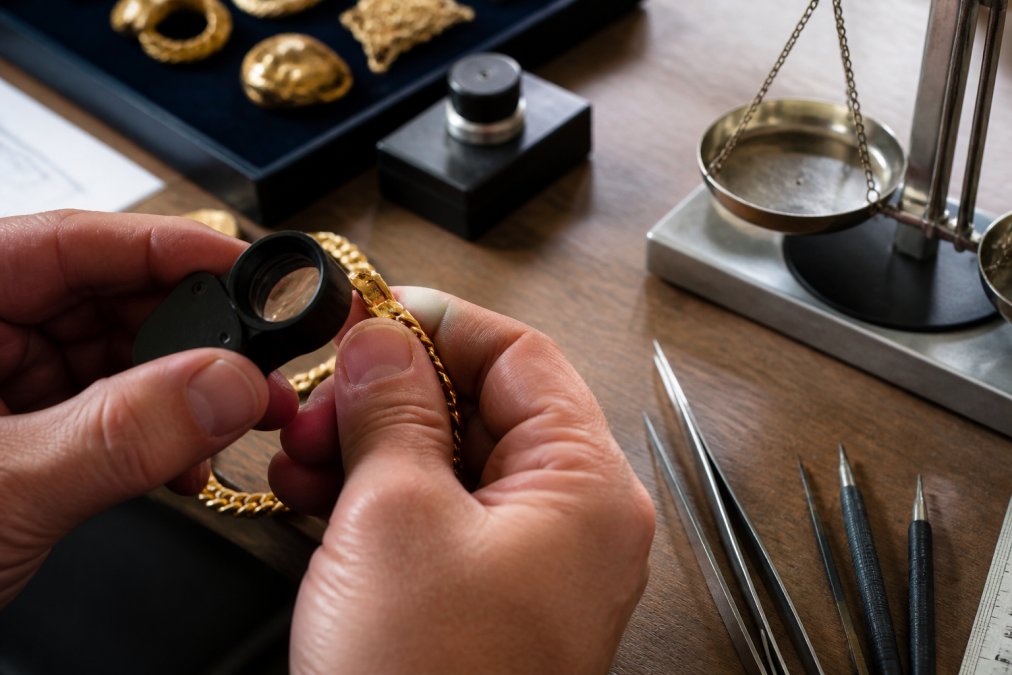
Beyond the hallmark, weight and feel matter. Solid gold has significant heft, it's denser than most base metals.
Durability for Everyday Wear: Why Solid Gold Lasts
The question of whether solid gold is worth the price comes down to durability. Solid gold doesn't scratch easily, doesn't tarnish, and doesn't require the careful handling that plated pieces demand. You can wear it daily, shower in it, and hand it down without worry.
Is 14K Gold Worth the Money for Daily Wear
14K gold is the sweet spot for everyday jewelry. It balances purity with practicality. At 58% pure gold, 14K pieces maintain the precious metal's beauty while incorporating alloy metals that increase durability and resistance to scratching.
Cost Per Wear Over a Lifetime
The real measure of whether solid gold is worth the price emerges when you calculate cost per wear. A solid 14K gold necklace might cost $735 to $1,795 depending on design and weight. If you wear that piece 300 days per year for 20 years, you're looking at 6,000 wearings.
Sourcing and Ethical Considerations: A Growing Factor in Value
Modern consumers increasingly factor ethical sourcing into purchase decisions, yet most "is solid gold worth it" guides ignore this dimension entirely. Where your gold comes from affects both its true cost and its value proposition.
Resale Value and Investment Potential
Solid gold retains intrinsic value because it's a precious metal. When gold market prices fluctuate, your jewelry holds real worth based on its weight and purity. A 14K gold piece can be melted down and refined, which means it has a floor value tied to the current price of gold.
Maintenance, Insurance, and Long-Term Value
Keeping Your Solid Gold Clean and Protected
Solid gold is remarkably low-maintenance compared to plated alternatives. Unlike gold plated jewelry, you don't need to avoid water, sweat, or mild soaps. Clean your solid gold jewelry with warm water, a soft brush, and mild dish soap. For deeper cleaning, a jeweler can use ultrasonic or steam cleaning without risk of damaging the piece.
Repairability and Restoration: A Hidden Financial Advantage
One of the strongest arguments for solid gold's value emerges when pieces need repair, an angle most "is it worth it" guides overlook entirely. Solid gold can be resized, re-soldered, re-polished, and restored by any competent jeweler without compromising the piece's integrity. A broken chain can be re-welded. A loose stone can be reset. Worn edges can be re-finished. Each repair restores the piece to near-original condition.
Appraisal and Insurance Considerations
If you're investing in solid gold jewelry, especially pieces that carry sentimental weight or significant cost, insurance makes sense. A professional appraisal documents the piece's value, materials, and craftsmanship. Most homeowners' insurance policies cover jewelry up to a limit (typically $1,000-$2,500), but valuable pieces warrant a separate rider or scheduled personal property endorsement.
Is Solid Gold Worth the Price? The Real Answer
Solid gold is worth the price if you're buying jewelry to wear, love, and potentially pass down. The durability, resale value, and freedom from constant maintenance make it the practical choice for pieces that matter to you.
Frequently Asked Questions
What is the difference between solid gold, gold-filled, and gold-plated jewelry?
Solid gold is an alloy made throughout, 14K gold contains 58.3% pure gold mixed with other metals for durability. Gold-filled has a thick layer of solid gold bonded to a base metal core, lasting 5-30 years with care. Gold-plated has a thin gold coating over base metal, typically wearing away in 1-3 years. Solid gold is the only option that won't discolor your skin or require frequent replating.
Is 14K gold worth the money compared to 10K or 18K?
14K gold offers the best balance for everyday wear. It contains 58.3% pure gold, making it durable enough for daily jewelry while maintaining intrinsic value. 10K is more affordable but contains only 41.7% gold, reducing resale value. 18K (75% pure gold) is softer and more expensive, better suited for special occasion pieces. For heirloom jewelry you'll wear constantly, 14K delivers lasting quality without excessive cost.
How can you tell if gold jewelry is solid or plated?
Look for a hallmark stamp inside the piece, 14K, 10K, or 18K indicates solid gold. Gold-plated items may show no stamp or say 'GP' or 'plated.' If unsure, a jeweler can test with acid. Real solid gold jewelry from reputable makers includes certification of purity.
Does solid gold jewelry hold its value over time?
Solid gold retains intrinsic value based on current market price and weight. A 14K necklace holds its melt value indefinitely. However, resale value depends on design, condition, and demand, vintage or designer pieces often appreciate, while trendy styles may sell for 40-60% of original price. Solid gold is a better store of value than gold-plated, which has no resale value once plating wears. For heirloom pieces, solid gold is the only choice.
Is it worth buying solid gold jewelry for everyday wear?
Yes, if you wear jewelry regularly. Solid gold won't tarnish, discolor your skin, or require replating. The durability means fewer repairs and replacements over decades. While initial cost is higher, 14K pieces from quality makers range from $735 to $1,795, the cost per wear drops significantly over 10+ years of daily use. Gold-plated alternatives require replacement every few years, making solid gold more economical long-term.
What makes solid gold hypoallergenic compared to gold-plated?
14K solid gold contains only gold and non-reactive metals like copper and zinc, which rarely cause allergies. Gold-plated jewelry exposes you to base metals (nickel, copper, brass) underneath once plating wears, causing skin discoloration and irritation. If you have sensitive skin, solid gold eliminates the risk of allergic reactions. Nickel-free solid gold is the safest choice for all-day wear.
When you're ready to invest in solid gold jewelry that celebrates your story, Robyn Canady offers heirloom-worthy designs crafted with quality materials and nearly two decades of design expertise. Our solid gold pieces are made to be worn, loved, and passed down, pieces that become more meaningful with time, not less. Shop all solid gold jewelry and discover pieces designed for every chapter of your life.