

Layering Gold Necklaces Daily: 7 Simple Tips
Table of Contents
- Start With a Base Layer That Works Every Day
- How to Layer Necklaces Without Tangling
- Best Necklace Lengths for Layering by Neckline
- Mixing Gold Chain Textures for Visual Balance
- Styling Pendants and Statement Pieces in a Stack
- Caring for Layered Gold Necklaces: Cleaning and Skin Sensitivity
- Conclusion
- Frequently Asked Questions
Last Updated: September 20, 2026
Start With a Base Layer That Works Every Day
Layering gold necklaces starts with one chain you never take off, it sets the length, metal tone, and weight everything else works around.
Nearly two decades of designing daily-wear pieces shape one rule: your shortest chain does the heavy lifting.
Choosing Your Shortest Chain
Your base layer should sit at 16 inches, right at the collarbone.
A dainty cable chain works best: light enough for all-day wear, strong enough for a small pendant. Skip heavy chains, a thick 16-inch chain fights everything above it.
Pick a clasp you can fasten without looking, since you'll put this chain on every morning.
Why 14K Gold Fill or Solid Gold Matters for Daily Wear
Gold fill is a thick layer of gold bonded to brass or copper. It costs less than solid gold and lasts far longer than plated chains, whose thin coat rubs off.
For daily wear, gold fill is the practical choice; solid gold works too but costs more.
You can also look for PVD non-tarnish coating on stainless steel, which resists oxidation and keeps its shine through daily wear.

How to Layer Necklaces Without Tangling
Tangling is the number one reason people give up on layered necklaces. The fix is mechanical: control spacing and hold chains together at the back.

Two tools solve almost every tangle problem: a layering clasp keeps chains from crossing, and the two-inch rule keeps them from crowding.
The Layering Clasp Solution
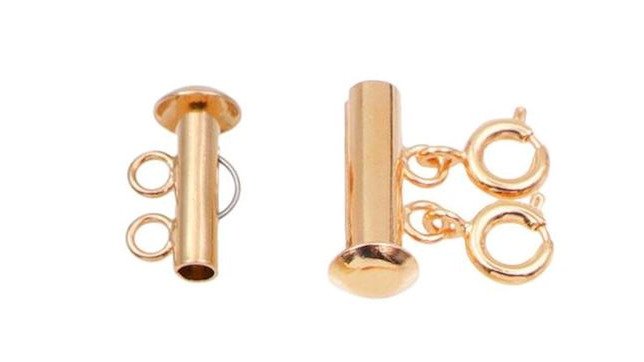
A layering clasp is a small connector that holds multiple necklaces on one closure.
The result: one clasp at the back instead of three, so chains can't wrap around each other, the most useful hardware for anyone layering gold necklaces daily.
The Two-Inch Rule for Spacing
The two-inch rule means each chain should be about two inches longer than the one above it: a 16-inch base, then 18, then 20.
Here's the spacing cheat sheet:
| Layer | Length | Sits At |
|---|---|---|
| Base | 16" | Collarbone |
| Middle | 18" | Upper chest |
| Third | 20" | Chest |
| Longest | 24" | Below chest |
Best Necklace Lengths for Layering by Neckline
Most layering guides give you a length chart and stop there. But the same 18-inch chain looks completely different depending on what you wear over it, the neckline is the frame, and the frame decides where each chain lands.
The Mechanism: Where Fabric Ends, Chains Begin
A layered stack works when each chain clears the fabric edge above it; a chain half on fabric and half on skin looks like a mistake. Put on the top first, note where the neckline falls, then choose lengths that land below that edge.
Neckline-by-Neckline Guide
Crew neck. The fabric edge sits high, so a 16-inch choker can disappear under the collar. Start at 18 inches and add a 20-inch chain, keeping the stack close to the collar; long chains fight the shirt's horizontal line.
Fit Problems and Fixes
The chain disappears under the collar. Your shortest chain is shorter than the fabric edge. Fix: add a one- or two-inch extender, or move the stack up one length.
A Note on Body Proportions
Mixing Gold Chain Textures for Visual Balance
A stack of identical chains looks flat. Mixing chain textures gives it depth.
Cable, Rope, Box, and Paperclip Chains
Each link style brings a different feel:
- Cable chain: round links, simple and classic. The best base layer.
- Rope chain: twisted links that catch light. Adds texture.
- Box chain: square links, sleek and modern. Good for pendants.
- Paperclip chain: oval links with space between them. Light and airy.
A cable base with a rope middle and a paperclip top works for almost any outfit, the textures separate visually.
Matching Metal Tones vs. Mixing Metals
Matching tones is the safe choice: all gold looks clean.
Styling Pendants and Statement Pieces in a Stack
Pendants and statement pieces need room. Drop one onto every chain and the stack turns into noise.
- Put a small pendant on your 16-inch base for an everyday look.
- Put a larger pendant on your 24-inch chain so it hangs clear of the others.
- Keep the chains around your pendant plain. Let the piece be the star.
Caring for Layered Gold Necklaces: Cleaning and Skin Sensitivity
A layered stack takes more abuse than a single necklace: chains rub against each other, collect lotion and sunscreen, and sit against skin all day. Without maintenance, gold fill can dull, clasps can loosen, and tangles become permanent. Here are the habits that keep a stack wearable, plus what to do when your skin reacts.
Why Layered Chains Get Dirty Faster
Every chain in a stack touches the ones above and below it, and that friction moves skin oils and product residue along the metal. A single necklace has one contact point with skin; a three-chain stack has several plus chain-on-chain contact. The result: faster buildup, faster tarnish on plated pieces, and more places for tangles to start.
The Weekly Cleaning Routine
Set aside five minutes weekly. Lay the chains flat on a soft cloth, separated, and wipe each from clasp to clasp with a dry polishing cloth. For stubborn buildup, use a drop of mild dish soap in warm water, work it along the chain, rinse, and pat dry.
Monthly Maintenance Checks
Once a month, inspect each chain for three things:
- Clasp tension. Open and close each clasp a few times. If it feels loose or doesn't snap shut, replace it before it drops the chain.
- Link wear. Run the chain through your fingers and feel for rough spots or stretched links, a stretched link will break.
- Pendant attachment. Check the bail and jump ring, the smallest parts and the first to fail.
A layering clasp adds one more check: make sure the connector holds each chain securely. If one slips out, the whole stack is at risk.
Storing a Layered Stack
Hang them. Use a jewelry stand with separate hooks, one chain per hook, spaced at least two inches apart. Chains stay straight and you see the whole stack at a glance.
Skin Sensitivity: What to Know
Some people react to the base metals under plated jewelry, most commonly nickel and, less often, cobalt. Symptoms include redness, itching, and a rash where the metal touches skin. If this happens, stop wearing the piece and let your skin clear before trying a different metal.
When to Retire a Chain
Gold fill and solid gold last for years with care, but plated chains have a lifespan. If the base metal shows through, the color has shifted, or the chain feels rough, replace it. A worn chain can scratch its neighbors, so retiring one piece protects the rest.
FTC guidance on jewelry marketing claims
Conclusion
Building a stack that survives daily wear comes down to a few habits: pick a base layer you trust, space chains with the two-inch rule, and hold them together with a layering clasp. Mix your textures, match your neckline, and clean weekly.
Shop All and start building your stack today.
Frequently Asked Questions
What is the trick for layering necklaces without them tangling?
The most effective trick is using a layering clasp, which attaches multiple chains to a single closure point so they hang independently. Also follow the two-inch rule: keep each chain at least two inches apart in length. A 16-inch base with an 18-inch and 20-inch layer prevents overlap. Choosing different chain weights and textures further reduces friction between strands during daily wear.
How do you choose the right lengths for a gold necklace stack?
Start with a 16-inch choker or collarbone-length chain as your base, then add an 18-inch and a 20-inch layer. For a longer statement, a 24-inch chain works well as the final piece. Match the shortest chain to your neckline: crew necks pair well with 16-18 inch chains, while V-necks and scoop necks suit 20-24 inch lengths. A pre-sized set like the Layer It Up 14K Gold Filled set of four chains ($198) takes the guesswork out of spacing.
Is layering gold necklaces still in style for everyday wear in 2026?
Yes. Layered gold necklaces remain a staple for daily wear because the look adapts to both casual and professional outfits. The trend has shifted toward curated, intentional stacks rather than maximalist piles. Mixing chain textures, incorporating one meaningful pendant, and keeping the overall look balanced are the hallmarks of current styling. Dainty cable chains and paperclip links are especially popular for their versatility.
How can I mix different gold chain textures for a daily look?
Combine at least two distinct link styles in one stack. A dainty cable chain paired with a paperclip or box chain creates contrast without visual clutter. If you use a rope chain, balance it with a thinner companion so the heavier texture stands out as the focal point. Keep metal finishes consistent, whether that is 14K gold fill, solid gold, or 18K gold plated stainless steel, for a cohesive appearance that works from morning to evening.