

Mejuri vs Aurate: Which Brand Wins in 2026
Table of Contents
- Mejuri vs Aurate: The Core Difference
- Mejuri vs Aurate Price Comparison
- Mejuri vs Aurate Quality and Materials
- Mejuri vs Aurate Reviews and Customer Sentiment
- Everyday Fine Jewelry Brands: Where They Fit
- Warranty, Returns, and Long-Term Value
- Which Brand Should You Choose?
- Frequently Asked Questions
Last Updated: October 7, 2026
Mejuri vs Aurate: The Core Difference
When choosing between Mejuri vs Aurate, you're comparing two direct-to-consumer jewelry brands that both target the everyday fine jewelry market. The core difference comes down to design philosophy and material approach. Mejuri emphasizes minimalist, stackable pieces designed for layering, while Aurate focuses on timeless, investment-worthy designs with stronger emphasis on ethical sourcing and transparency.
Both brands position themselves as accessible fine jewelry alternatives to traditional luxury. They skip the retail markup and sell directly to customers. But their execution differs in meaningful ways that affect which brand suits your needs.
Understanding these differences helps you make a choice aligned with your style and budget.
The real question isn't which brand is objectively "better." It's which one matches how you wear jewelry and what you prioritize in a piece.
Mejuri vs Aurate Price Comparison
Mejuri positions itself as the more affordable option of the two, with entry-level pieces starting lower than Aurate's minimum price points. However, both brands operate in the same general range once you move beyond basic studs and simple chains.
Mejuri's strength is accessibility for first-time fine jewelry buyers. Their minimalist designs keep manufacturing costs down. A simple Mejuri gold necklace or bracelet typically costs less than an equivalent Aurate piece.
Aurate commands higher prices for several reasons. Their pieces tend to be slightly heavier and feature more complex designs. They also emphasize supply chain transparency, which adds cost. Their commitment to ethical sourcing and detailed documentation of gold origin increases production expenses that get reflected in retail pricing.
For direct price comparison, you'll want to visit both sites and compare specific pieces. Neither brand publishes standardized pricing guides, and collections rotate seasonally. What matters is understanding the pricing philosophy: Mejuri = accessible entry point, Aurate = premium positioning with transparency justification.
The price difference rarely exceeds 30-40% for comparable pieces. If budget is your primary concern, Mejuri wins. If you value documented ethical sourcing and don't mind paying for it, Aurate's pricing reflects that commitment.
Mejuri vs Aurate Quality and Materials
Gold Purity and Hallmarking Standards
Both brands use 14k solid gold as their primary material, which is the industry standard for everyday fine jewelry. This karat weight offers the right balance between durability and precious metal content. Fourteen-karat gold is 58.3% pure gold mixed with alloy metals that add strength.
Mejuri also offers 18k gold options in select pieces. Eighteen-karat gold contains 75% pure gold and is softer than 14k, making it slightly more prone to scratching with daily wear. However, it has richer color and higher resale value.
Aurate focuses exclusively on 14k solid gold. This consistency simplifies their production and keeps costs predictable. It also signals their design philosophy: they believe 14k is the optimal choice for jewelry meant to be worn daily.
Both brands hallmark their pieces with proper karat stamps, which is essential. Hallmarking proves gold purity and protects your investment. Unmarked gold raises questions about authenticity. Verified hallmarks from both Mejuri and Aurate give you confidence in what you're purchasing.
Aurate includes detailed documentation about gold sourcing, including recycled gold percentages in some collections. Mejuri mentions using both newly mined and recycled gold but provides less granular supply chain detail. If ethical sourcing and transparency are priorities, Aurate's documentation advantage is meaningful.
Tarnish Resistance and Durability
Solid gold doesn't tarnish, which is a major advantage over gold-plated or gold-filled alternatives. Both Mejuri and Aurate use solid gold as their foundation, so neither will develop the dark patina that plated jewelry develops over time.
The alloy metals mixed into 14k gold do matter for durability. Nickel is a common alloy but triggers sensitivity in roughly 10-15% of people. Both brands use nickel-free alloys in their standard collections, making them suitable for sensitive skin.
Mejuri's minimalist designs mean fewer prongs, settings, and intricate details that could weaken over time. Simpler geometry = fewer stress points. This design approach actually contributes to durability beyond just material choice.
Aurate's designs are more detailed and ornate in many cases. More intricate work requires more skilled craftsmanship but also creates more potential wear points. A complex setting with multiple prongs is more vulnerable to damage than a smooth band, all else equal.
For everyday wearability, both brands hold up well with normal care. The real durability test comes after 12+ months of continuous wear. Pieces that survive a full year of daily wear without visible damage, loose stones, or weakened settings have passed the practical durability threshold.
Mejuri vs Aurate Reviews and Customer Sentiment
Customer reviews reveal consistent patterns for both brands. Mejuri customers praise the aesthetic appeal and stackability of pieces. The minimalist designs live up to their promise, and the lower price point means customers feel less anxious about daily wear. Common praise: "Beautiful, delicate, exactly what I wanted."
Mejuri's complaints center on sizing inconsistencies and occasional quality control issues. Some customers report rings that don't fit as expected or bracelets with slightly uneven finishes. These aren't widespread problems, but they appear in reviews frequently enough to notice.
Aurate customers emphasize the quality feel and ethical sourcing story. Owning a piece with documented recycled gold content appeals to environmentally conscious buyers. The heavier weight and more substantial designs make pieces feel more luxurious. Common praise: "Feels like real jewelry, not costume pieces."
Aurate's main complaint involves customer service responsiveness. Some buyers report delayed responses to sizing or damage questions. This matters because if a piece breaks or doesn't fit, you need reliable support. The price point justifies expecting responsive service.
Both brands have solid overall ratings (typically 4.2-4.6 out of 5 stars across review platforms), but the nature of complaints differs. Mejuri struggles with consistency; Aurate struggles with service speed.
Everyday Fine Jewelry Brands: Where They Fit
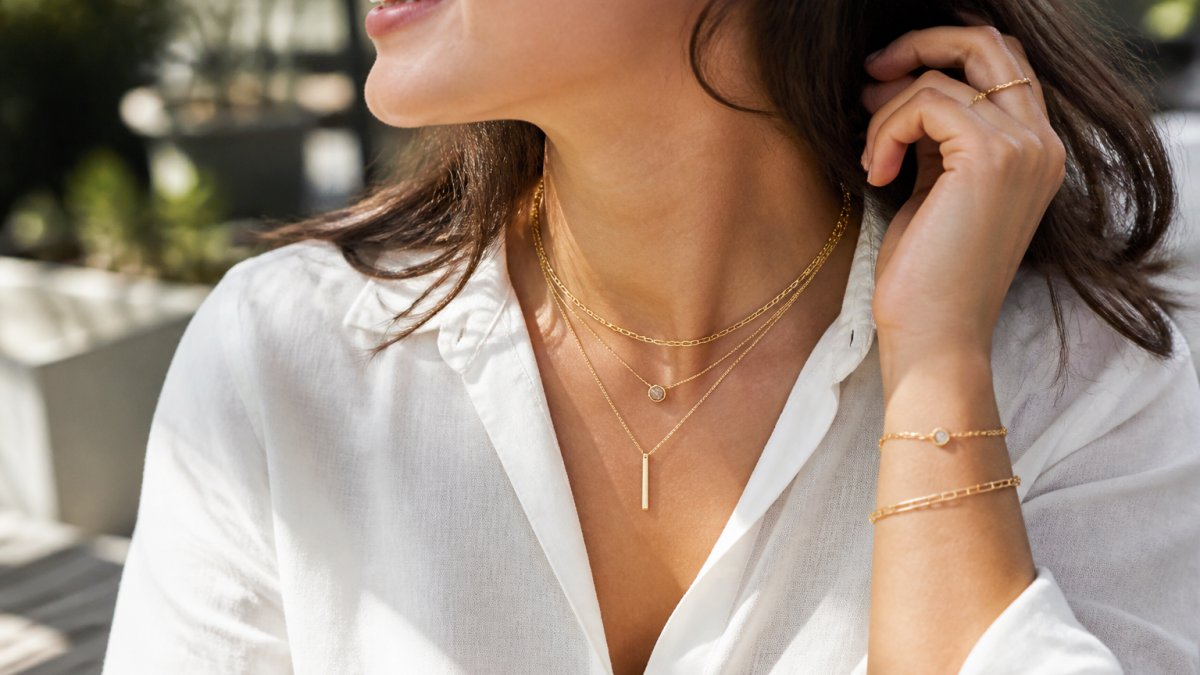
Both Mejuri and Aurate occupy the "everyday fine jewelry" category, but they approach it differently. Everyday fine jewelry means pieces designed to be worn constantly, not stored in a safe. It's jewelry for your actual life, not special occasions.
This category has exploded in the past five years as consumers reject the false choice between costume jewelry and investment pieces. Everyday fine jewelry offers real gold and quality craftsmanship at accessible prices.
Mejuri invented much of this category's aesthetic. Their designs feel modern and intentionally understated. You're not making a statement; you're wearing something beautiful that happens to be real gold. This appeals to minimalists and people who layer multiple pieces.
Aurate positions itself in the same category but with more design variety. Their pieces range from minimal to ornate, giving more style options within the everyday fine jewelry space.
The everyday fine jewelry category is where Robyn Canady also plays. We understand that real jewelry should work for your actual life, not just special occasions.
Layering Potential and Versatility
Mejuri built its reputation on layering. Their pieces are intentionally designed to stack and combine. A thin Mejuri necklace pairs beautifully with another thin necklace at a slightly different length. Their bracelets stack without looking cluttered. This design intention matters because not all fine jewelry stacks well, some pieces are too chunky or too ornate to combine.
Aurate's designs also layer, but less intentionally. Some pieces work beautifully in combinations; others feel complete on their own. This reflects their design philosophy: each piece should stand alone as a finished statement. Layering is possible but secondary.
If you plan to wear multiple pieces together regularly, Mejuri's design language is more supportive. If you prefer single, statement pieces, Aurate's approach aligns better with that preference.
Skin Sensitivity and Hypoallergenic Options
Nickel sensitivity affects a meaningful percentage of jewelry wearers. Both brands address this by using nickel-free alloys in their standard 14k gold. However, they don't always highlight this clearly on product pages, which creates unnecessary anxiety for sensitive buyers.
Aurate provides more explicit hypoallergenic messaging. Their product descriptions often specify "nickel-free" even when all pieces meet this standard. This transparency helps sensitive buyers shop with confidence.
Mejuri mentions hypoallergenic options but less consistently. You may need to contact customer service to confirm nickel-free status for specific pieces, which adds friction to the buying process.
If you have confirmed nickel sensitivity, Aurate's clearer labeling saves time and reduces purchase anxiety. Both brands can accommodate you, but Aurate makes it easier.
Warranty, Returns, and Long-Term Value
Mejuri offers a 30-day return window and handles repairs through their customer service team. They don't advertise a formal lifetime warranty, but they do repair manufacturing defects. The process requires contacting support and potentially shipping pieces back.
Aurate provides a more structured warranty approach. They offer repair services and replacement guarantees for manufacturing defects within a defined period. Their customer service documentation is clearer about what's covered and what isn't. This transparency reduces confusion if you need warranty service.
Neither brand offers a true lifetime warranty like some luxury brands do. Both treat warranties as covering manufacturing defects, not normal wear and tear. A scratched ring or loosened stone from daily wear isn't typically covered, that's maintenance, not a defect.
For long-term value, consider cost-per-wear. A $200 Mejuri necklace worn daily for 5 years costs $0.11 per wear. That's the math that justifies fine jewelry investment.
Resale value is another long-term consideration. Solid gold has intrinsic value, so even damaged pieces have scrap value. However, Mejuri and Aurate pieces don't develop strong secondary markets like luxury brands do. You won't resell a Mejuri necklace for 70% of purchase price.
Which Brand Should You Choose?
Choose Mejuri if you want affordable, minimalist pieces designed specifically for layering. You prioritize aesthetic appeal and don't mind slightly lower price points.
Choose Mejuri also if you're new to fine jewelry and want to test whether wearing real gold suits your lifestyle. The lower entry price means less financial risk if you discover it's not for you.
Choose Aurate if you value ethical sourcing documentation and want pieces with more design presence. You're willing to pay more for supply chain transparency and stronger customer service.
Choose Aurate also if you want pieces that work standalone without layering. Their design variety means you can find something that matches your personal style more precisely than Mejuri's narrower aesthetic.
Neither brand is objectively superior. The choice depends on what you value: affordability and minimalism (Mejuri) versus transparency and design variety (Aurate). Both deliver on their promises. Both use quality materials.
Test both brands by visiting their websites and comparing specific pieces you'd actually wear. See which aesthetic resonates more. Check the reviews for pieces you're considering.
Finding the right fine jewelry brand matters because you'll wear these pieces constantly. At Robyn Canady, we believe everyday jewelry should combine quality materials with designs you genuinely love.
Frequently Asked Questions
Is Mejuri or Aurate better quality?
Both brands use solid gold and offer quality craftsmanship, but they differ in approach. Mejuri focuses on direct-to-consumer pricing with 14k solid gold and minimalist design. Aurate emphasizes ethical sourcing and sustainability, using recycled gold. Quality depends on your priorities: if cost-per-wear matters most, Mejuri's transparent pricing appeals to everyday jewelry wearers. If supply chain transparency and sustainability are priorities, Aurate's commitment to responsible sourcing stands out. Both offer warranties covering defects, so long-term durability is comparable.
How do Mejuri and Aurate compare in price?
Mejuri positions itself as accessible fine jewelry with direct-to-consumer pricing that eliminates middleman markups. Aurate typically prices higher, reflecting their emphasis on ethical sourcing and recycled gold sourcing. For everyday fine jewelry pieces like delicate necklaces or stud earrings, expect Mejuri to offer more budget-friendly entry points. Aurate's pricing reflects their sustainability practices and supply chain transparency. Visit each brand's website for current pricing, as rates fluctuate based on gold market conditions and seasonal offerings.
Which brand is better for everyday jewelry and layering?
Both brands excel at everyday luxury pieces designed for layering. Mejuri's minimalist design aesthetic makes their pieces ideal for stacking, their delicate chains and simple studs work seamlessly together. Aurate's refined designs also layer well, though their pieces tend toward slightly bolder statements. Consider your personal style: Mejuri suits understated elegance, while Aurate balances sophistication with conscious craftsmanship.
Are Mejuri and Aurate hypoallergenic for sensitive skin?
Both brands use solid 14k gold or higher karat weights, which are naturally hypoallergenic and nickel-free when properly hallmarked. If you have metal allergies, solid gold from either brand is safer than gold-filled or vermeil options. Aurate explicitly highlights their nickel-free sourcing and ethical practices. Mejuri's solid gold pieces similarly avoid common irritants. If you have severe skin sensitivity, confirm the exact alloy composition before purchasing, both brands provide detailed material specifications on their websites.